
가장 진지한 고백
Sep 14, 2023 – Feb 12, 2024
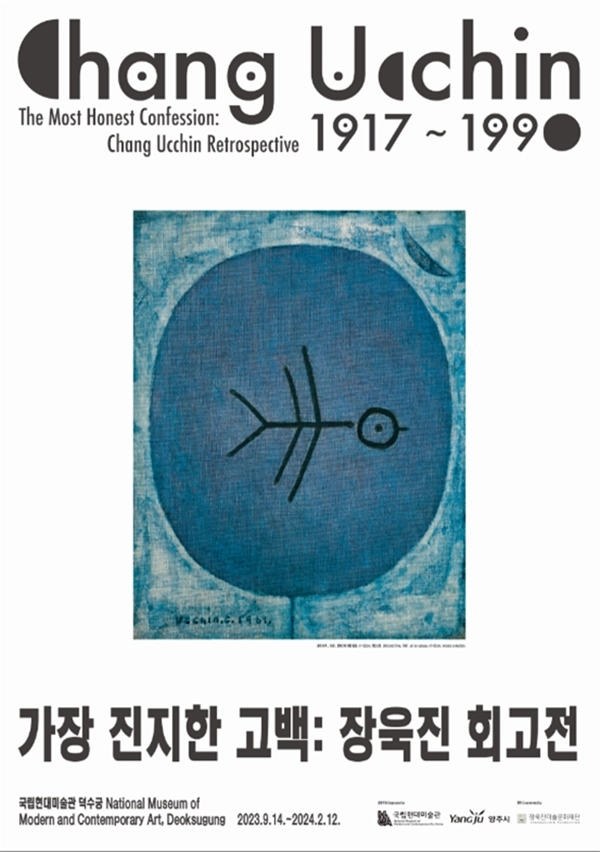
Chang Uc Chin (1917–1990) is a leading figure in modern and contemporary Korean art, recognized as a second-generation Western-style painter and a first-generation modernist. Alongside Lee Jung-seob, Kim Whanki, Park Su-geun, and Yoo Young-kuk, he forms a central axis of Korean modern art history.
The defining qualities of his work are continuity and consistency. Throughout his life, he repeatedly explored a limited range of familiar, everyday motifs—trees and magpies, the sun and moon, houses and family—while continually renewing them through changes in medium and form. His oeuvre includes approximately 730 oil paintings and over 300 ink works, as well as drawings, prints, illustrations, and ceramic paintings, demonstrating an extraordinarily prolific and versatile practice.
Rooted in the formal language of Western painting, Chang Uc Chin’s art seamlessly integrates Eastern spirituality and sensibility into a unified visual world—an achievement rarely seen in Korean modern art.
This exhibition surveys nearly six decades of his artistic journey, from his student years in the 1920s to his passing in 1990. As reflected in his declaration, “I have lived honestly,” his works continue to speak to us today with sincerity and quiet conviction.
장욱진(張旭鎭, 1917–1990)은 한국 근‧현대 미술을 대표하는 2세대 서양화가이자 1세대 모더니스트로, 이중섭·김환기·박수근·유영국과 함께 한국 현대미술사의 중요한 축을 이룬다.
그의 작품 세계를 관통하는 특징은 ‘지속성’과 ‘일관성’이다. 나무와 까치, 해와 달, 집과 가족 등 제한된 일상적 모티프를 평생 반복해 다루었지만, 매체와 형식의 변화를 통해 끊임없이 새로움을 만들어냈다. 유화 약 730점, 먹그림 300여 점을 비롯해 드로잉, 판화, 삽화, 도자기 그림 등 다양한 재료를 넘나들며 왕성한 작업을 이어갔다.
서양화의 조형 언어를 바탕으로 동양적 정신성과 형태를 자연스럽게 결합해 하나의 세계로 완성해낸 점은 장욱진 예술의 가장 큰 성취로 꼽힌다. 이는 한국 현대미술사에서도 드문 사례다.
이번 전시는 1920년대 학창 시절부터 1990년 작고에 이르기까지 약 60여 년간 이어진 장욱진의 작품 세계를 한 자리에서 조망한다. “나는 정직하게 살아왔노라”라는 그의 고백처럼, 그의 그림은 지금도 여전히 진솔한 시선으로 우리 앞에 서 있다.
- Exhibition Details
- 가장 진지한 고백
- Sep 14, 2023 – Feb 12, 2024
- 덕수궁 2층, 1·2전시실, 3층, 3·4전시실
- Artist
- 장욱진
출처 : 국립현대미술관(https://www.mmca.go.kr/)
