이승구 LEE SEUNG KOO
이승구는 중앙대학교 예술대학 조소학과를 졸업한 후 독일의 키엘 국립조형예술대학(Staatliche Kunsthochschule Kiel)에서 보어디플롬(Vordiplom)을, 슈투트가르트 국립조형예술아카데미(Die Staatliche Akademie der Bildenden Künste Stuttgart)를 졸업했다. 이후 독일과 베이징을 중심으로 개인전과 단체전, 다양한 프로젝트에 참여하며 활동을 이어가고 있다.
그는 2000년 미술세계대상전 특별상, 2007년 독일 ‘Kunstprojekt Klett-Passage am Hauptbahnhof’에서 1등상을 수상했으며, 2011년 ‘Flying Paper’(독일), ‘Numb’(베이징), 2012년 ‘견인지애’(서울) 등 다수의 전시를 통해 주목받았다. 그의 작품은 현재 독일 만하임의 괴테 인스티투트와 중국 베이징의 베이징 아트 호텔 등에 소장되어 있다.
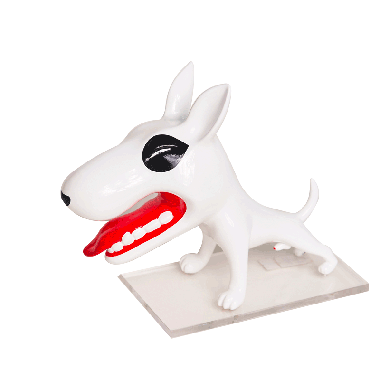
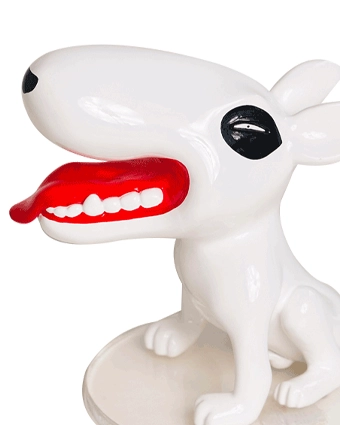
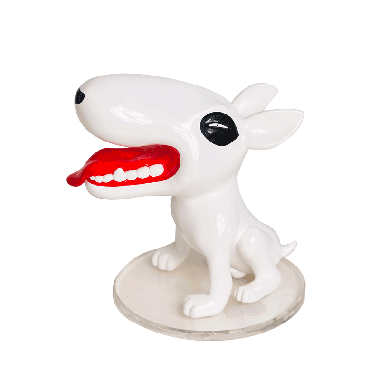
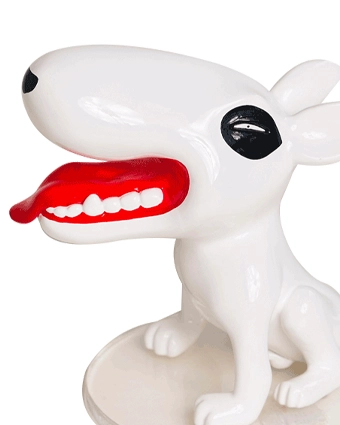
이승구는 오랜 기간 해외에서 이방인으로 살아온 경험을 바탕으로, 허상과 현실의 경계를 넘나드는 새로운 캐릭터를 창조해 왔다. 우스꽝스러운 불량 강아지 ‘띵구’는 사회가 만들어낸 관념에 질문을 던지는 존재로, 사나운 본능을 숨긴 불테리어처럼 사회에 순응하는 듯 보이지만 자유를 갈망하는 작가 자신의 내면을 투영한다. 그는 물질적 욕망 속에서 허망한 꿈을 꾸며 현실을 망각하는 인간의 모습을 유머러스하게 묘사하며, ‘견인지애’와 첫 국내 개인전 ‘Three Naughty Boys’를 통해 인간과 동물의 만남과 이별, 사랑과 상처, 교감과 치유를 다루었다. 또한 DMZ 군사분계선을 따라 진행된 설치 전시에서는 통일에 대한 사유를 드러내며, 고정관념 뒤에 숨겨진 진실을 해학적으로 뒤집어 보여준다.
Lee Seung Koo studied Sculpture at Chung-Ang University before completing his Vordiplom at the Staatliche Kunsthochschule Kiel and graduating from the Staatliche Akademie der Bildenden Künste Stuttgart in Germany. He has since participated in numerous solo and group exhibitions and projects in Germany and Beijing.
He received a Special Prize at the Art World Grand Prize Exhibition in 2000 and won first prize at the Kunstprojekt Klett-Passage am Hauptbahnhof in 2007. His work gained further attention through exhibitions such as “Flying Paper” (Germany, 2011), “Numb” (Beijing, 2011), and “Gyeoninji-ae” (Seoul, 2012). His works are held in collections including the Goethe-Institut in Mannheim and the Beijing Art Hotel.
Drawing from his long experience as a foreigner living abroad, Lee creates characters that move between illusion and reality. Through the comical delinquent puppy “Ttinggu,” he questions socially constructed norms. Like a bull terrier that conceals its hunting instincts, the character reflects the artist’s own desire for freedom beneath apparent conformity. Lee humorously depicts people who lose sight of reality while chasing empty dreams driven by material desire. In the group exhibition “Gyeoninji-ae” and his first solo exhibition in Korea, “Three Naughty Boys,” he examined encounters and separations between humans and animals, love and wounds, communication and healing, questioning the essence of universalized imagery. His installation along the barbed fences of the DMZ further revealed his reflections on division and reunification, reversing familiar perspectives to expose the truths hidden behind convention.