

이만익 LEE MAN IK
이만익은 1938년 황해도 해주에서 태어났다. 경기중학교 3학년 재학 중 이미 제2회 국전에 ‘정동의 가을’과 ‘골목’을 출품해 입선하며 일찍이 두각을 나타냈다. 이후 서울대학교 미술대학에 진학해 박서보, 김창열, 김서봉, 윤명로, 김봉태, 최관도 등과 함께 화실에서 밤마다 그림을 그리며 치열한 수련의 시간을 보냈다.
파리 유학 초기에는 사회 부조리에 대한 환멸과 현대인의 소외감을 주제로 작업했으나, “그림 그리는 것에만 빠져 있다”는 비판을 계기로 그림을 그리는 이유와 서양을 모방하지 않는 한국 회화의 본질에 대해 깊이 고민하게 된다. 귀국 후 그는 한국적 소재로 한국적 미감을 표현하는 독자적인 회화 세계를 구축했다.
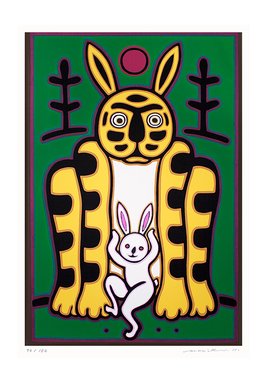
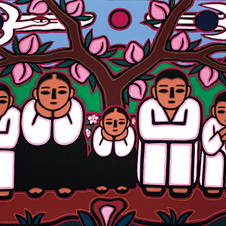
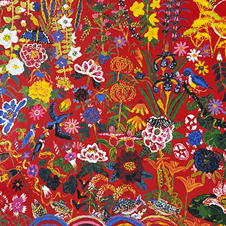
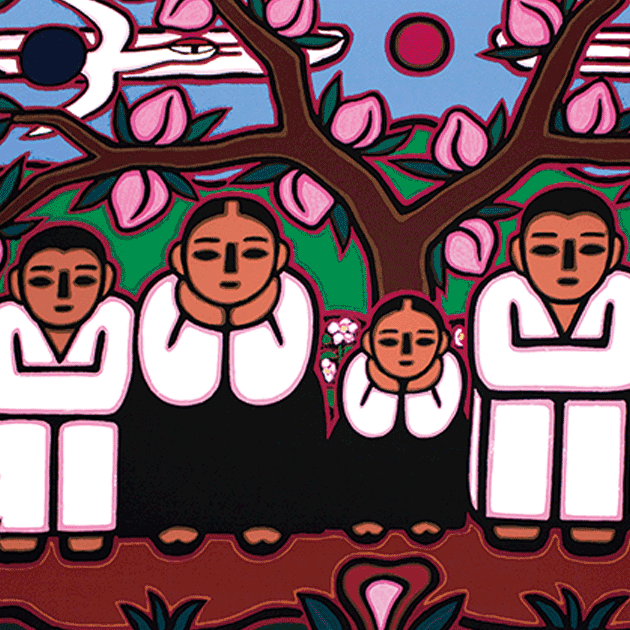
원근법이 생략된 평면적인 화풍은 토속 민화의 특징과 닮아 있으며, 민화의 전통을 현대적으로 수용해 철저히 자기화했다는 평가를 받는다. 원숙한 필치와 품위 있는 색감은 그의 회화성을 더욱 돋보이게 한다. 독특한 화풍과 한국적 감성으로 대중적 인기와 미술계의 입지를 동시에 확보한 그는, 1988년 서울올림픽 미술감독을 맡았고 창작 뮤지컬 <명성황후>, <댄싱섀도우>의 포스터 제작 등 다양한 방식으로 대중과 만났다. 타계 이후에도 2022년 소마미술관에서 <이만익 재조명전>이 열리는 등, 그가 그린 가장 한국적인 얼굴은 시대를 넘어 계속해서 사랑받고 있다.
Lee Manik was born in 1938 in Haeju, Hwanghae-do. While still a third-year student at Gyeonggi Middle School, he was selected for the 2nd National Art Exhibition with his works “Autumn in Jeongdong” and “Alley,” revealing his talent at an early age. He later entered the College of Fine Arts at Seoul National University, where he spent long evenings painting alongside artists such as Park Seo-bo, Kim Chang-yeol, Kim Seo-bong, Yoon Myung-ro, Kim Bong-tae, and Choi Gwan-do.
During his early years of study in Paris, he focused on themes of social disillusionment and modern alienation. However, criticism that he was “too absorbed in painting” led him to reflect deeply on the purpose of painting and on developing a distinctly Korean form of art rather than imitating Western models. After returning to Korea, he established an independent artistic world that expressed Korean aesthetics through Korean subjects.
His flat pictorial style, in which perspective is deliberately omitted, recalls the characteristics of traditional folk painting, and is widely regarded as a modern internalization of minhwa traditions. His mature brushwork and refined use of color further emphasize the painterly quality of his work. Gaining both popular appeal and critical recognition for his uniquely Korean sensibility, his activities expanded into the public sphere, including serving as art director for the 1988 Seoul Olympics and creating posters for original musicals such as <The Last Empress> and <Dancing Shadow>. Even after his passing, his legacy endures, exemplified by the retrospective <Lee Manik Revisited> held at the SOMA Museum of Art in 2022, affirming that the most Korean faces he painted continue to resonate across generations.