
이대원 LEE DAI WON
이대원은 1945년에 경성제국대학교 법문학부를 졸업했다. 제17, 18, 19회 조선미술전람회에서 연속 입선했으며, 해방 후에는 국전에서도 수상했다. 대학 졸업 후 심산 노수현에게 사군자를 배우는 등 독자적인 미술 공부를 통해 자신만의 독특한 경지를 이루었다.
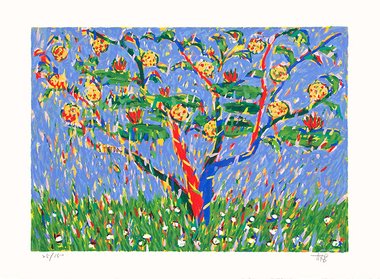
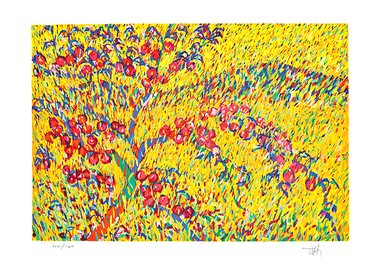
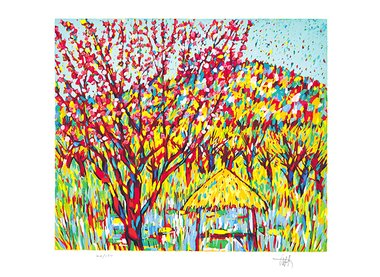
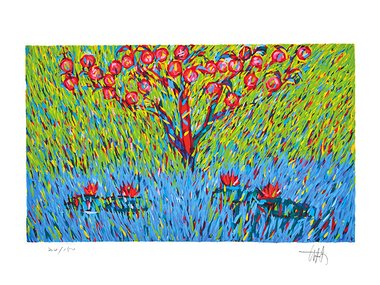
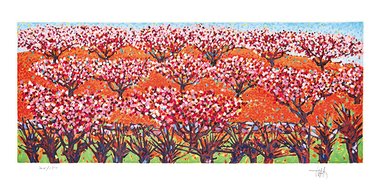
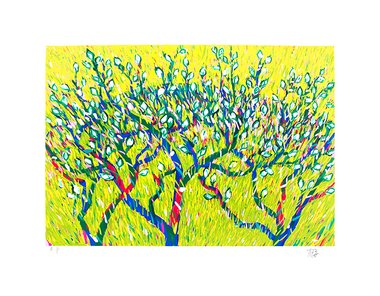
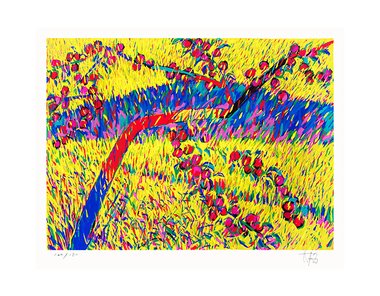
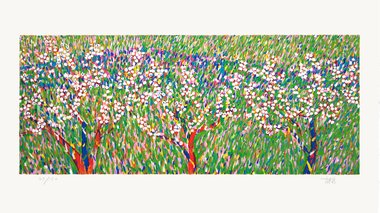
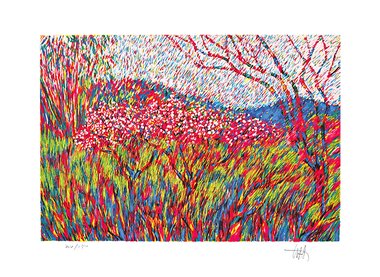
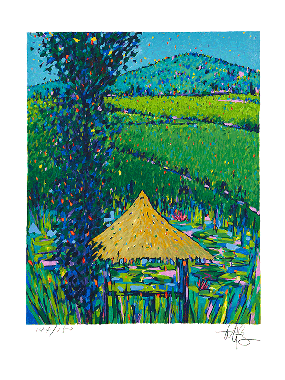
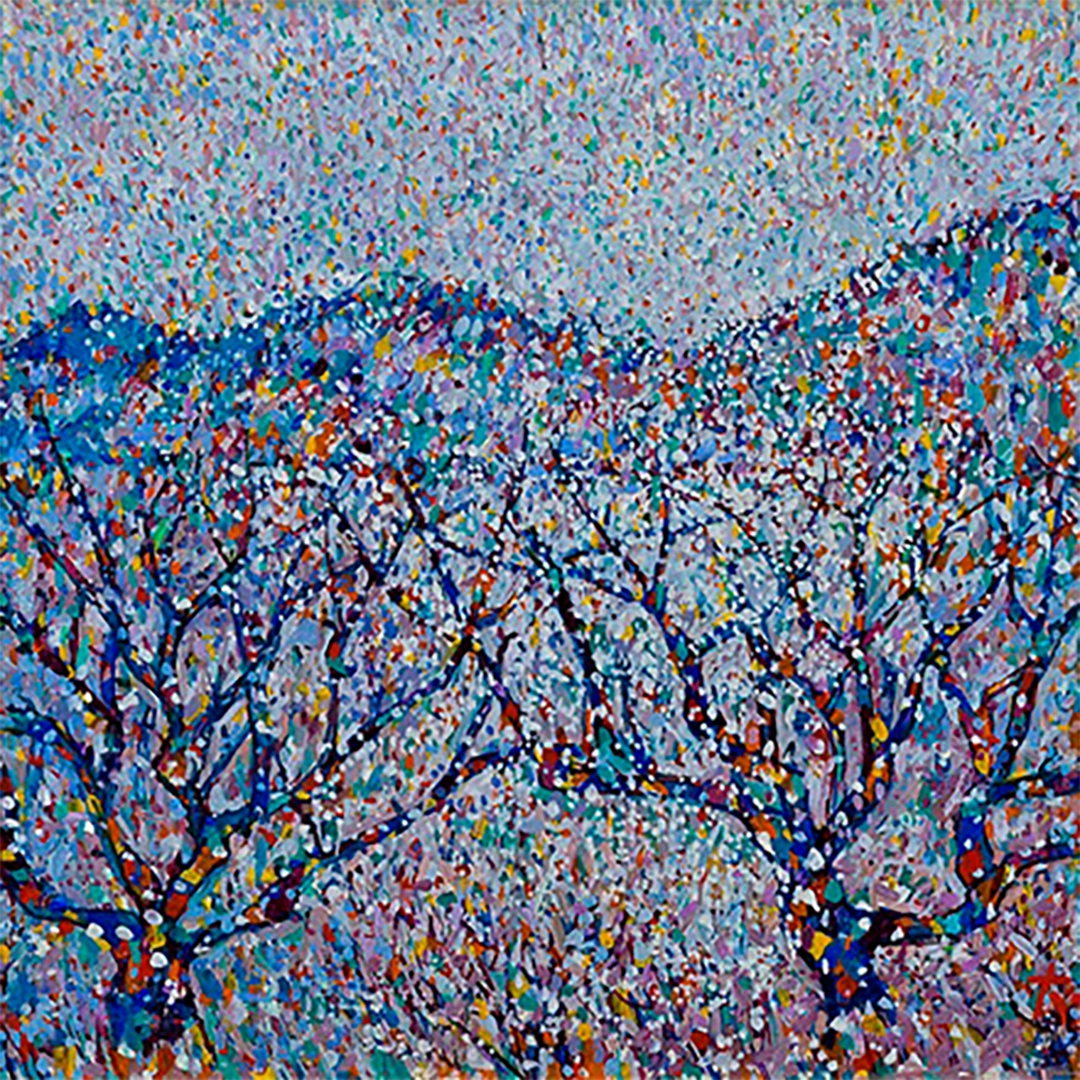
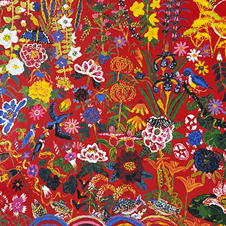
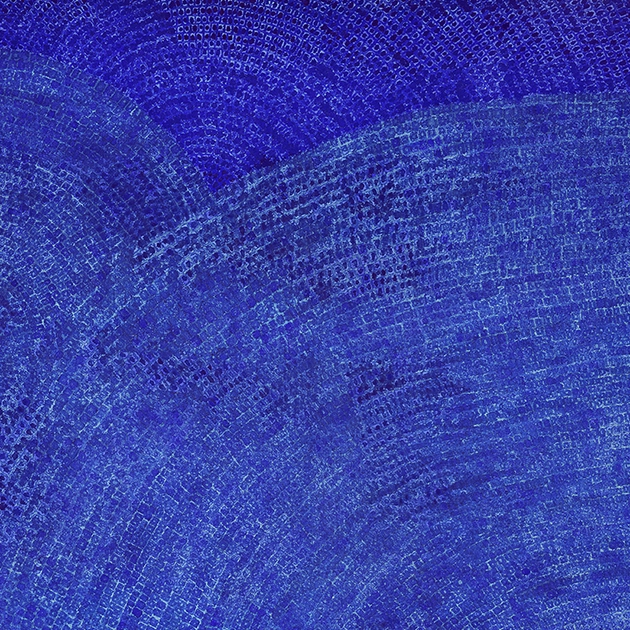
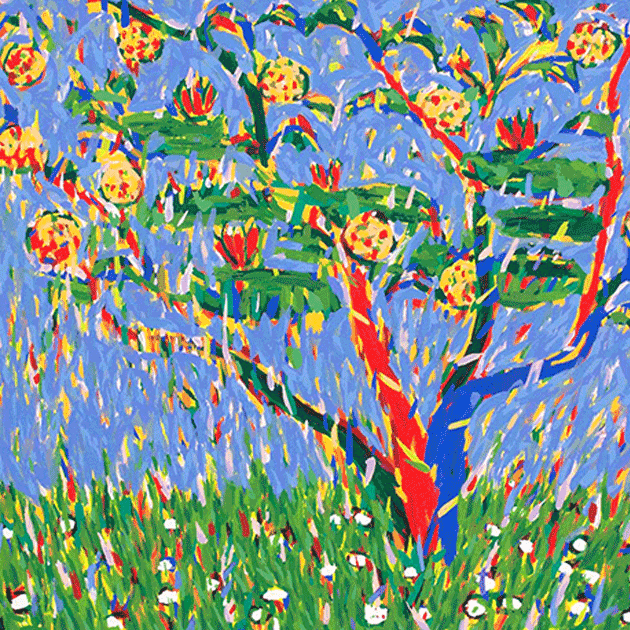
1950~1960년대 한국 화단에서 많은 화가들이 모노크롬 회화나 추상화에 관심을 가졌던 것과 달리, 이대원은 산과 들, 나무, 연못, 돌담, 과수원 등 자연을 소재로 한 구상 작품을 그렸다. 선과 점, 그리고 화려한 색채의 짧고 연속적인 붓 터치로 자연 속 사물을 자신만의 기법으로 구현했으며, 강렬한 원색의 화면은 야수파를 연상시키고 연속적인 선과 점은 인상파의 점묘법을 떠올리게 하며 생동감을 불러일으킨다.
1959년 반 화랑을 맡아 운영하며 다수의 개인전을 열었고, 미국, 일본, 독일, 파리 등 해외에서도 활발히 전시를 펼쳤다. 홍익대학교 초대 미술대학장(1972~74)과 총장(1980~82)을 역임했으며, 대한민국예술원 회장, 외교통상부 문화홍보대사 등 대외 활동에서도 두각을 나타냈다. 국민훈장 목련장, 대한민국예술원상, 오지호 미술상, 금관문화훈장 등을 수상했으며, 이중섭·박수근·장욱진과 함께 한국적 구상의 명맥을 잇는 중요한 작가로 평가받는다. 그는 2005년 작고할 때까지 70여 년간 열정적인 작품 활동을 이어가며 한국 현대미술사에 큰 족적을 남겼다.
Lee Dai Won graduated from the Faculty of Law and Letters at Keijō Imperial University in 1945. He was consecutively selected for the 17th, 18th, and 19th Joseon Art Exhibitions, and after Korea’s liberation, he also received awards at the National Art Exhibition. Following his graduation, he pursued independent artistic study, including learning the Four Gracious Plants from Simsan Noh Soo-hyun, through which he established his own distinctive artistic realm.
While many Korean artists active in the 1950s and 1960s focused on monochrome painting or abstraction, Lee Dai Won continued to create figurative works based on nature, depicting mountains and fields, trees, ponds, stone walls, and orchards. Using lines and dots alongside short, rhythmic brushstrokes in vivid colors, he rendered natural subjects through a highly personal technique. His intense primary colors evoke Fauvism, while the continuous lines and dots recall Impressionist pointillism, generating a strong sense of vitality.
In 1959, he took charge of Ban Gallery and held numerous solo exhibitions, while also actively exhibiting abroad in the United States, Japan, Germany, and Paris. He served as the founding dean of the College of Fine Arts at Hongik University (1972–74) and later as its president (1980–82), and was also active externally as president of the National Academy of Arts of Korea and as a cultural ambassador for the Ministry of Foreign Affairs and Trade. He received many honors, including the Order of Civil Merit (Magnolia Medal), the National Academy of Arts Award, the Oh Ji-ho Art Award, and the Gold Crown Order of Cultural Merit. Alongside Lee Jung Seop, Park Su-geun, and Chang Ucchin, he is regarded as a key figure who carried forward the lineage of Korean figurative painting. Until his passing in 2005, he devoted more than seventy years to artistic creation, leaving behind an enduring legacy in the history of modern Korean art.