김흥수 KIM HEUNG SOU
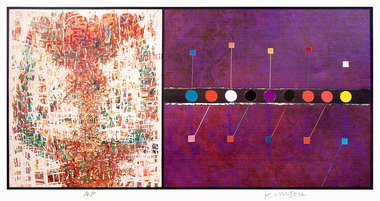
김흥수는 1919년 함흥에서 태어나 1944년 도쿄미술학교 서양미술학과를 졸업했다. 해방 후 서울예고와 서울대학교 미술대학에서 활동했으며, 1955년 프랑스 파리의 아카데미 드 라 크랑크 샤브마에르에서 회화를 공부했다. 1961년 국전 심사위원을 역임했고, 현대작가 초대전과 문화자유초대전 등에 참여하며 활발한 작품 활동을 펼쳤다.
1967년에는 미국 무어대학 교환교수로 도미해 전미국 유화조각전에 출품하고 순회 개인전을 열었다. 1977년에는 추상과 구상의 조화를 추구하는 ‘하모니즘’ 미술을 선언하며 국내 화단에 새로운 흐름을 제시했다. 그는 현란한 색채와 관능미가 깃든 서구적 감각의 화풍을 한국 미술계에 본격적으로 소개한 주역으로 평가받는다.
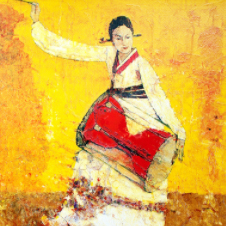
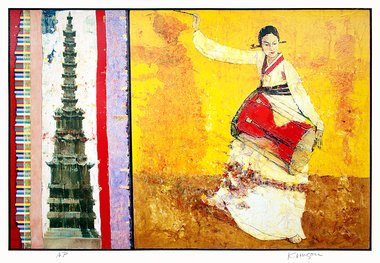
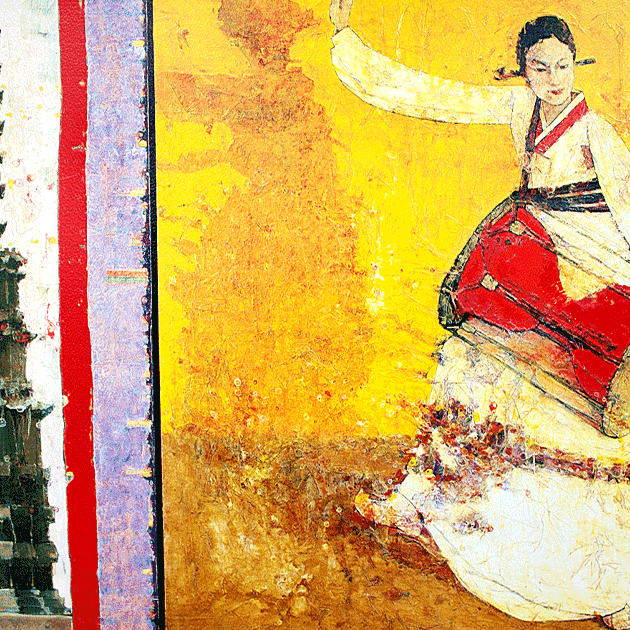
모자이크 기법에서 착안한 색면 분할을 통해 한국적인 소재와 에로틱한 이미지를 화면에 담았으며, 누드와 기하학적 추상을 대비·융합하는 방식으로 구상과 추상을 한 화면 안에 공존시켰다. 2014년 노환으로 타계하기까지 하모니즘 예술을 개척한 독보적인 존재로, 21세기 세계 미술사에 남을 거장으로 평가받고 있다.
Kim Heungsou was born in 1919 in Hamhung and graduated in 1944 from the Department of Western Painting at the Tokyo School of Fine Arts. After Korea’s liberation, he worked at Seoul Arts High School and the College of Fine Arts at Seoul National University, and in 1955 studied painting at the Académie de la Grande Chaumière in Paris. He served as a juror for the National Art Exhibition in 1961 and participated actively in invitational exhibitions such as the Contemporary Artists Exhibition and the Cultural Freedom Exhibition.
In 1967, he traveled to the United States as a visiting professor at Moore College of Art, participated in the All-American Oil Painting and Sculpture Exhibition, and held traveling solo shows. In 1977, he declared the advent of “Harmonism,” an artistic philosophy seeking harmony between abstraction and figuration, introducing a fresh current to the Korean art scene. He is regarded as a key figure who brought Western sensuous styles marked by vivid color and eroticism into Korean modern art.
Drawing inspiration from mosaic techniques, he divided the pictorial surface into color fields to explore Korean themes alongside erotic imagery. By juxtaposing and fusing nudes with geometric abstraction, he united figuration and abstraction within a single canvas. Until his passing in 2014 due to illness, Kim Heungsou remained a singular pioneer of Harmonism, widely regarded as a master whose legacy endures in the history of 21st-century world art.